Case study 01

Victorian Murder Mystery

A social-deduction murder mystery aboard a stylized Victorian train, designed for scrutiny, suspicion, and readable player behavior.

Role
Art Director · Lead 3D Artist
Project
Social-deduction mystery world for a client-specific custom platform
Engine
Unity
Focus
Social readability · baked-lighting hierarchy · scale validation · Progressive GPU Lightmapper iteration
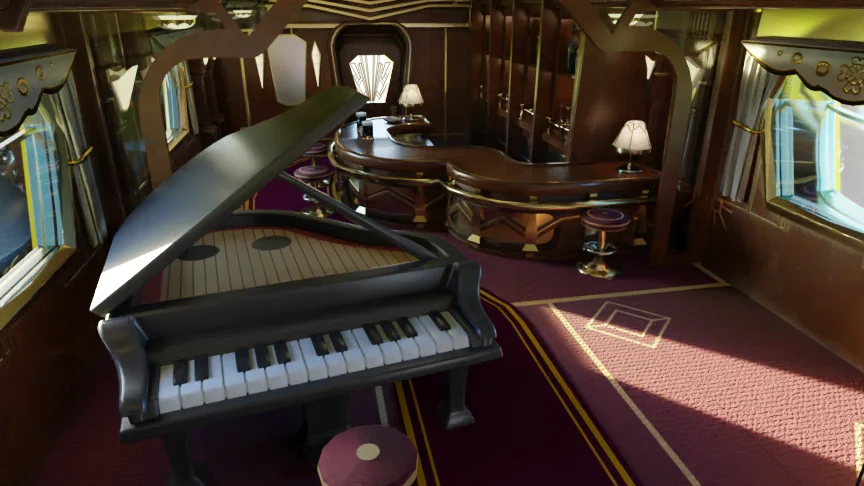
Final Victorian miniature-diorama lounge in Unity with a piano, curved bar, and warm practical fixtures

Final output · full view

Final output
Final Unity environment · social-deduction setting for a client-specific custom platform
01

Creative + technical goal

The Mandate

Create a readable Victorian train for social deduction: validate carriage scale before detailed production, organize clue-rich compartments with practical and indirect light, and make baked-lighting review fast enough to sustain creative iteration.

Project premise

Built in Unity for a client-specific custom platform, Victorian Murder Mystery placed players inside a stylized social-deduction experience. One participant was the hidden killer; the others combined environmental clues with observed behavior to identify them. The world therefore needed to support investigation and conversation, not atmosphere alone.

The challenge

Dense period detail could obscure clues and player silhouettes, while the miniature camera made small scale errors immediately visible. Lighting had to create tension and guide attention without flattening the behavioral read. Slow baked-lighting turnaround also limited how often the art team could evaluate a scene.
02

Reference + composition

Reference & Ideation

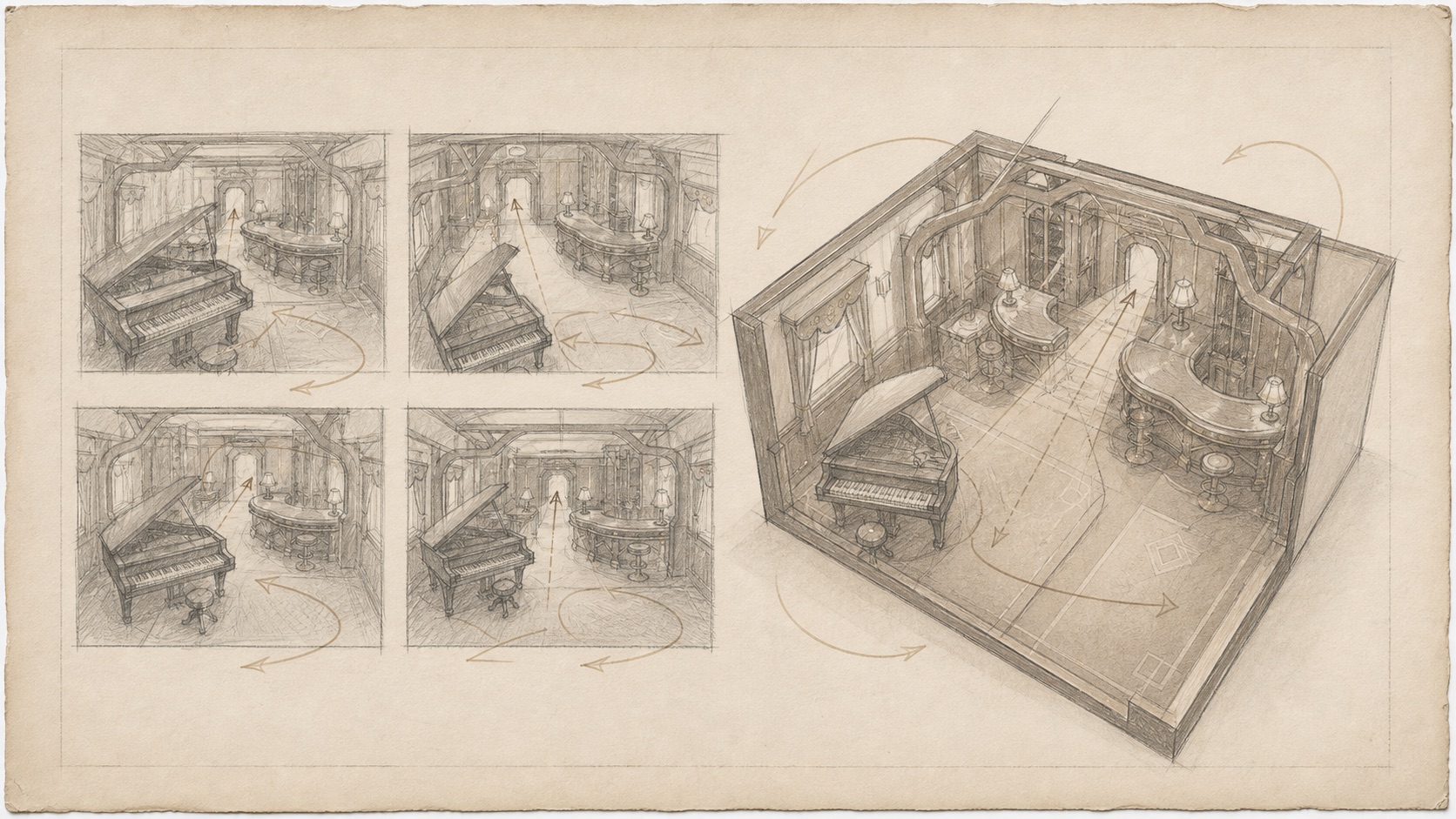
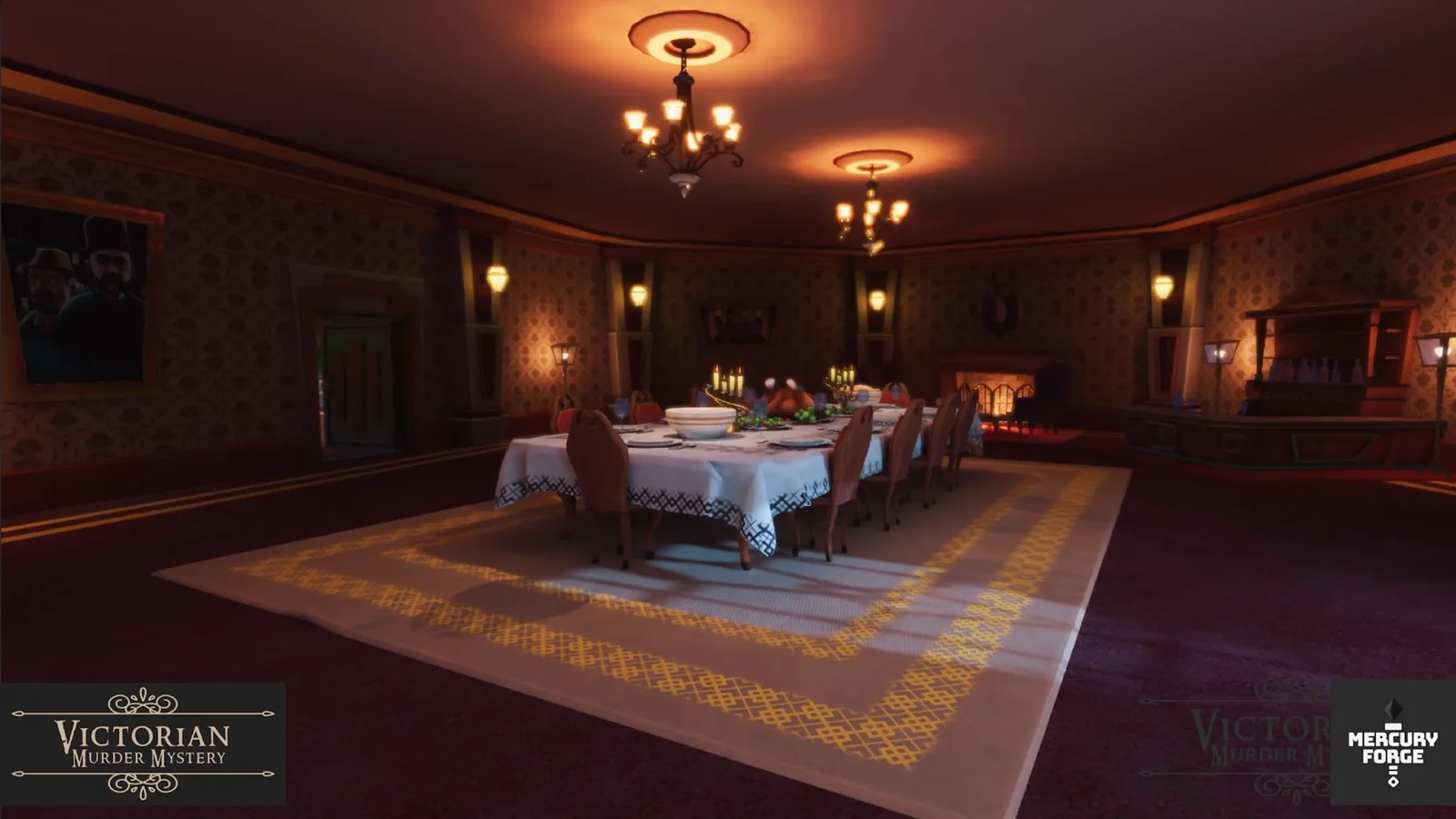
Research focused on luxury train corridors, lounge and bar carriages, enclosed cabins, period materials, and investigation games built around searching, conversation, and suspicion. Pencil thumbnails tested camera angle, movement through narrow carriages, player sightlines, clue zones, prop density, and focal-light placement. Rapid blockouts then validated carriage proportions and became shared scale references for the art team and vendors.

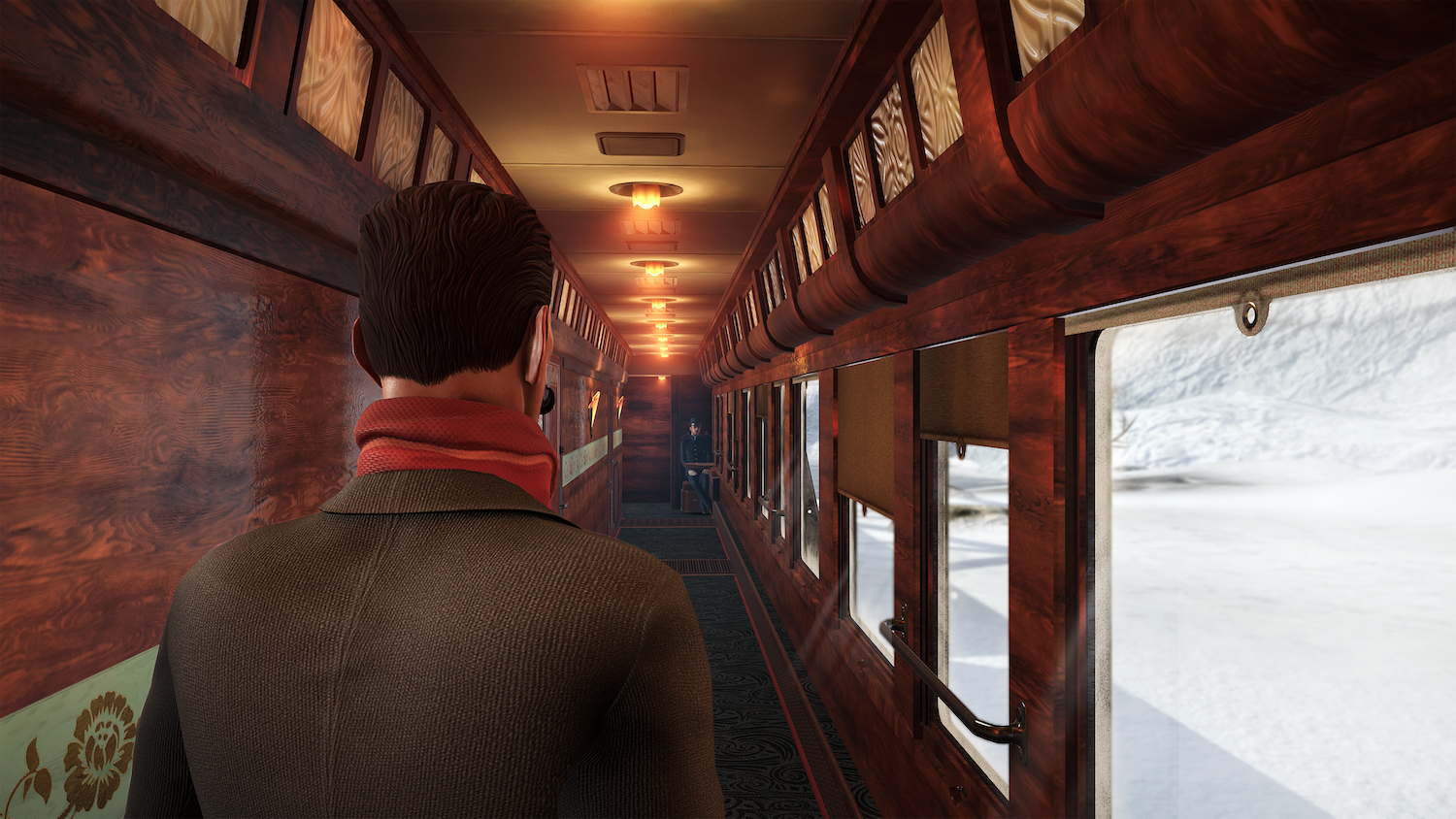
Game reference showing a long luxury-train corridor with compartment doors and controlled sightlines

Corridor rhythm, compartment thresholds, and a strong navigation axis informed the carriage layout.

Game reference · corridor readability
Corridor rhythm, compartment thresholds, and a strong navigation axis informed the carriage layout.
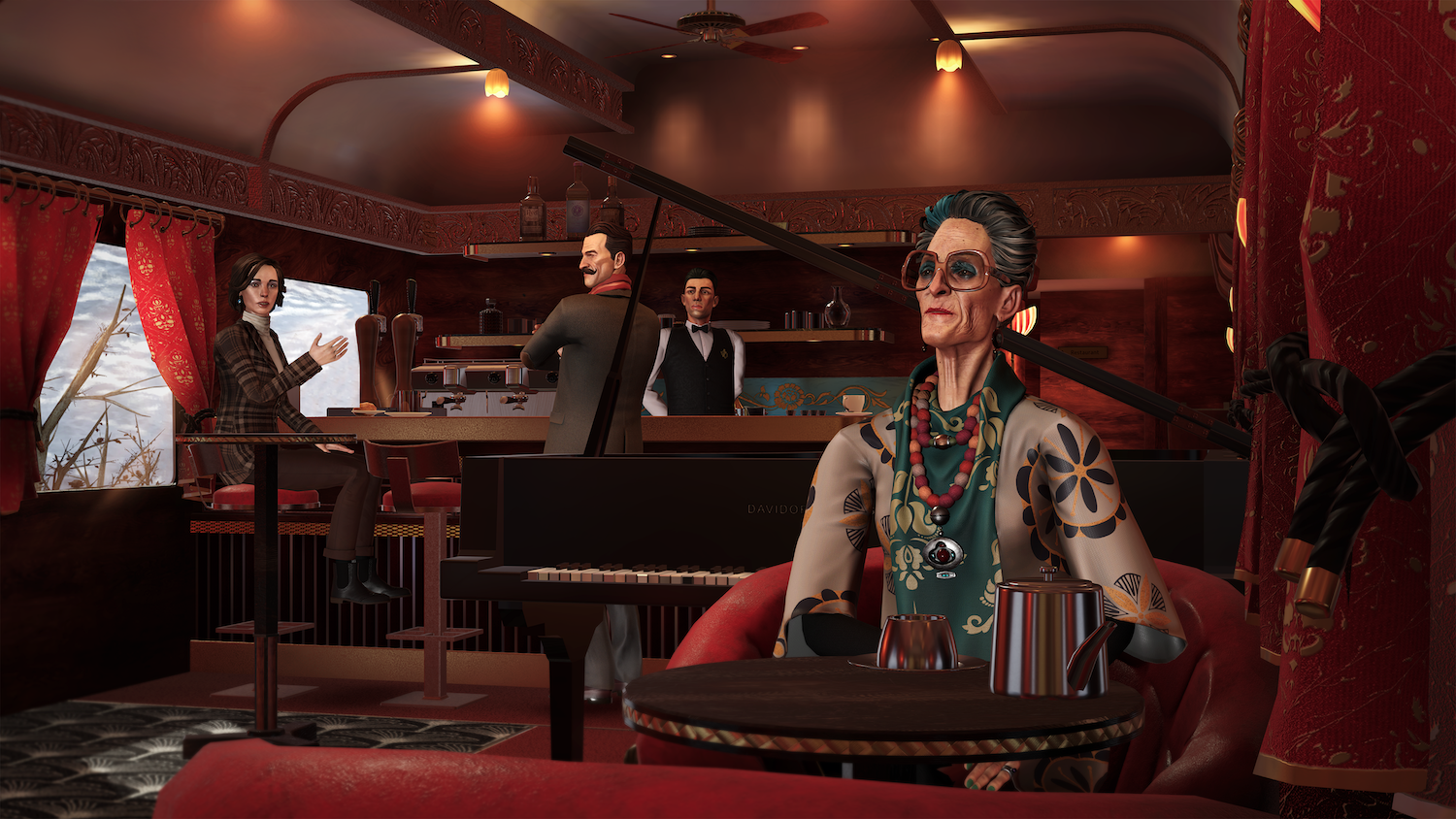
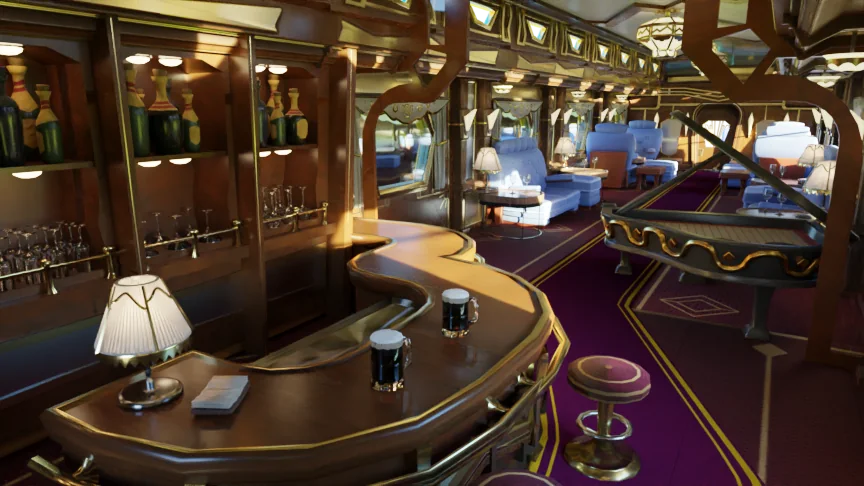
Game reference showing a richly furnished train bar used as a social investigation space

Corridor rhythm, compartment thresholds, and a strong navigation axis informed the carriage layout.

Game reference · social carriage
A compact lounge combines conversation space, period identity, and multiple readable clue surfaces.
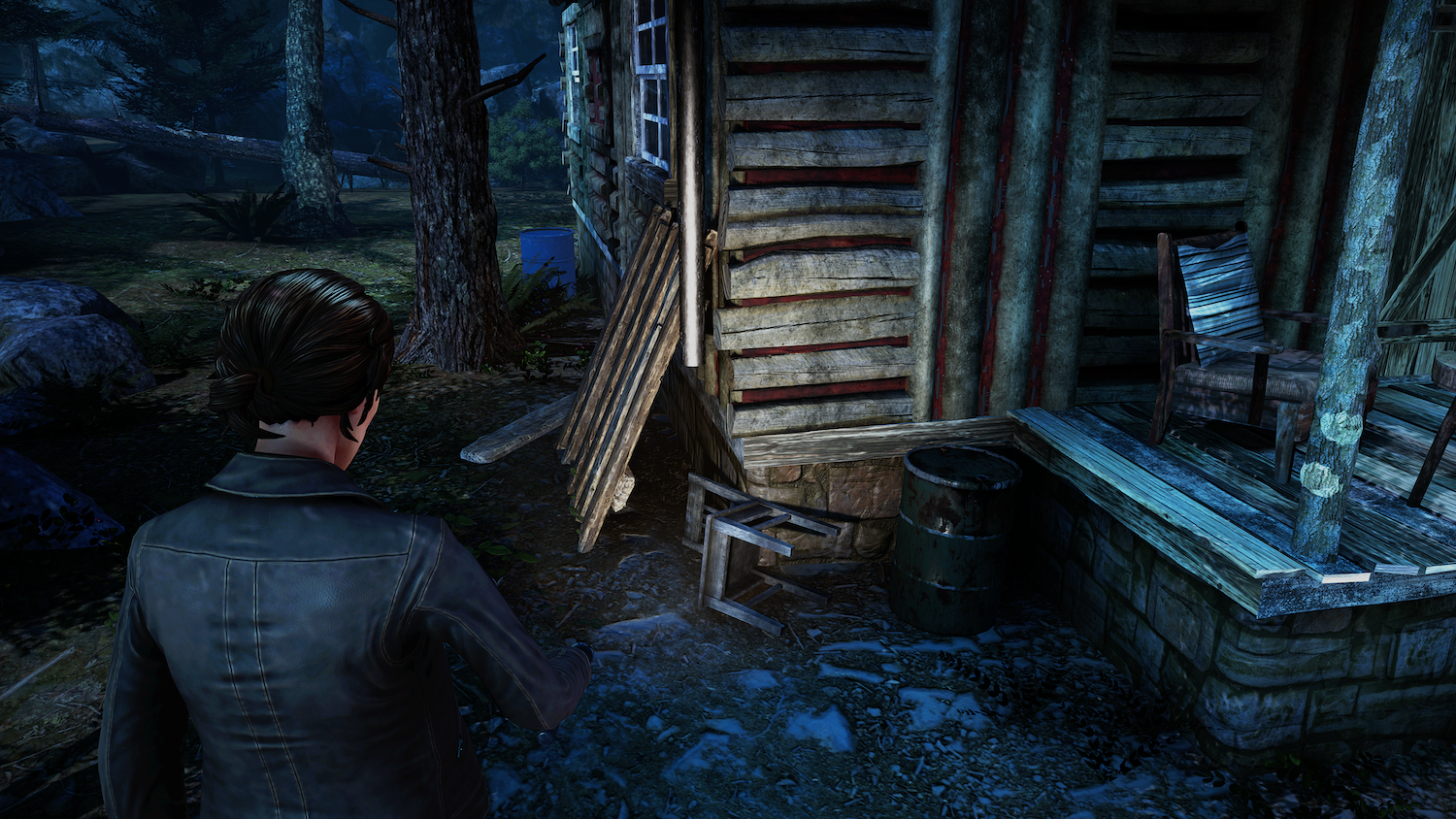
Game reference showing an enclosed train cabin arranged for close investigation

Corridor rhythm, compartment thresholds, and a strong navigation axis informed the carriage layout.

Game reference · clue search
An enclosed cabin concentrates evidence, props, and warm practical light into a focused search area.
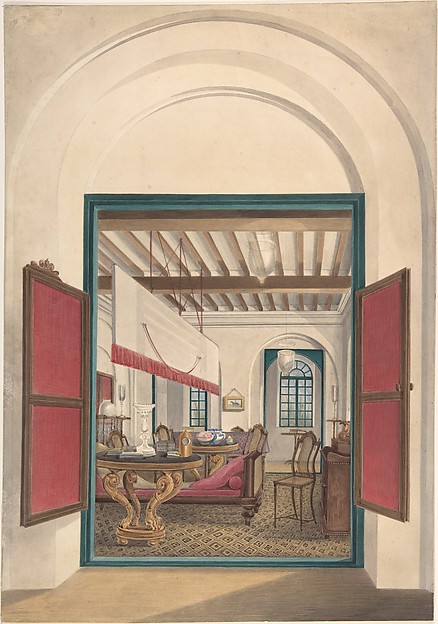
Nineteenth-century watercolor of a richly layered period interior

Corridor rhythm, compartment thresholds, and a strong navigation axis informed the carriage layout.

Period reference · material hierarchy
Layered arches, furniture rhythm, and controlled period color informed the Victorian material language.
AI-generated concept-phase graphite study of Victorian room composition thumbnails and an isometric scale blockout

AI-generated · concept phase · full view

AI-generated · concept phase
AI-generated for this portfolio case study to communicate concept-phase composition, player sightlines, clue zones, and scale decisions; not shipped artwork.
03

Reference → target → final

Color & Lighting Script

The palette organizes investigation. Dark foreground mass frames the miniature stage, controlled period midtones keep players and clues readable, warm practicals establish local search areas, and cooler fill separates depth without weakening the mystery.

Final Victorian interior showing wood, brass, carpet, and window-lit material families

Material hierarchy: hand-painted albedo establishes mahogany, plum, brass, and parchment families; trim sheets and atlasing keep repeating architecture coherent; restrained specular response protects the stylized finish.

Final frame · material hierarchy
Material hierarchy: hand-painted albedo establishes mahogany, plum, brass, and parchment families; trim sheets and atlasing keep repeating architecture coherent; restrained specular response protects the stylized finish.
Victorian lighting review frame showing warm practical fixtures and cool window separation

Material hierarchy: hand-painted albedo establishes mahogany, plum, brass, and parchment families; trim sheets and atlasing keep repeating architecture coherent; restrained specular response protects the stylized finish.

Final frame · lighting hierarchy
Lighting hierarchy: warm practical pools establish investigation zones, cool window fill separates adjacent rooms, and deep charcoal foregrounds frame clue-bearing midtones.

Portfolio color-direction analysis

Victorian Murder Mystery

  1. Key light

    Lamp amber

    #D89A4A
    Usage
    Reserved · focal pools
    Purpose
    Warm practical fixtures define local search areas and clue priority.
  2. Midtone

    Antique plaster

    #9B8974
    Usage
    Support · room planes
    Purpose
    A controlled neutral band keeps players legible against period detail.
  3. Shadow

    Shadow teal

    #344B50
    Usage
    Dominant · depth
    Purpose
    Cool indirect values separate adjoining rooms and preserve spatial depth.
  4. Material / local

    Mahogany

    #5B2C2E
    Usage
    Support · set identity
    Purpose
    Wood and velvet stay below the focal-light range so richness never becomes noise.
  5. Atmosphere

    Parchment reserve

    #F3E8D2
    Usage
    Support · breathing space
    Purpose
    Pale windows and wall planes create visual breaks around movement and evidence.
  6. Accent

    Brass glint

    #E6BF6A
    Usage
    Reserved · clue edge
    Purpose
    Small highlights reward scrutiny without telegraphing the hidden killer.
04

Mood + visual target

AI-Assisted Concepting

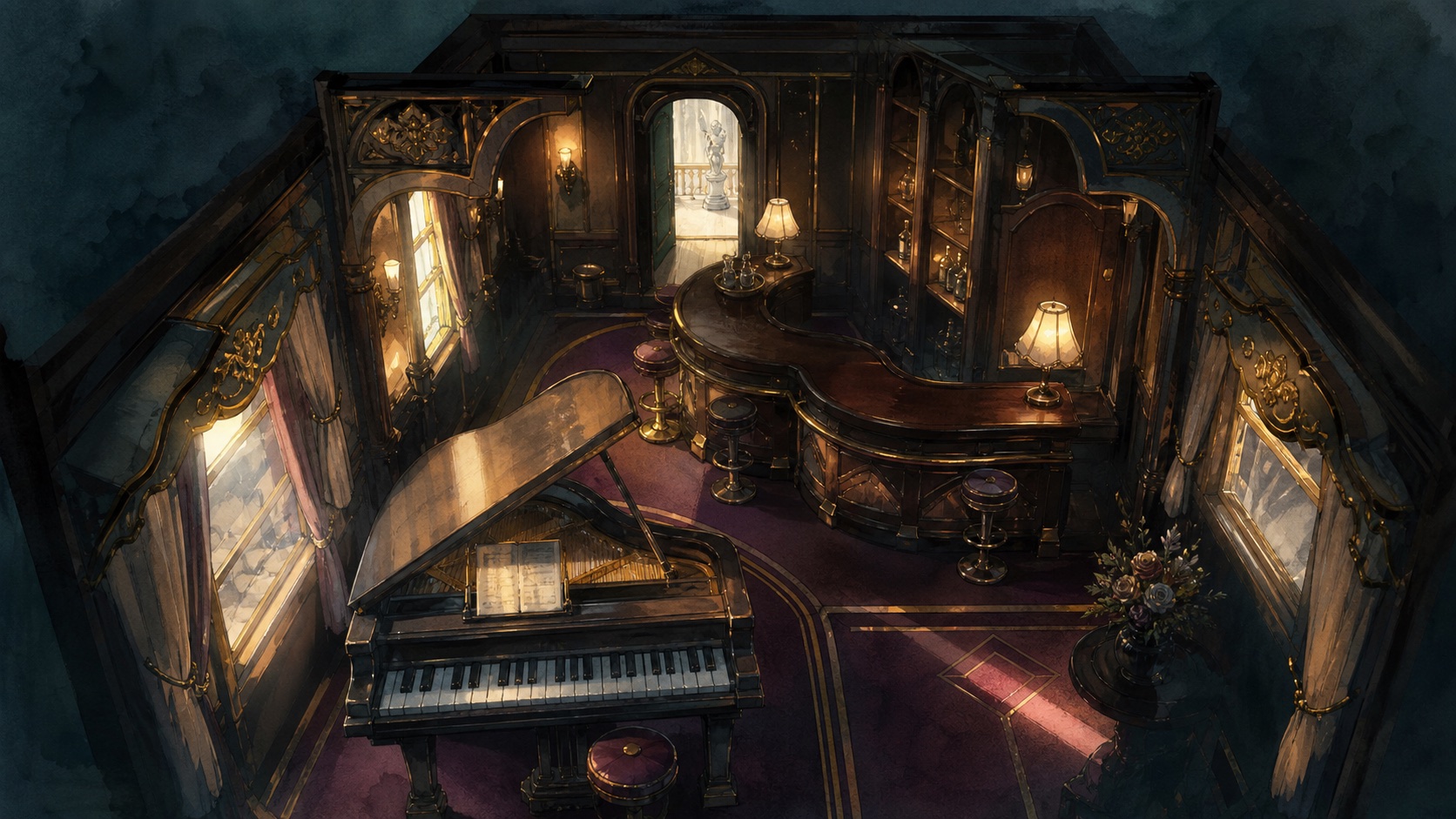
AI-generated concept-phase image of a Victorian miniature lounge with warm practical light and cool teal shadow

AI-generated · concept phase · full view

AI-generated · concept phase
AI-generated for this portfolio case study to illustrate concept-phase tests of practical-light pools, cool depth separation, and clue-readable focal hierarchy; not shipped artwork.

“Explore broadly. Translate selectively. Author the final decision in engine.”

My story intent and visual direction established the target first. Leonardo and Stable Diffusion then helped compare warm practical light, cool indirect separation, palette, and clue-readable focal hierarchy before detailed production. ChatGPT and Claude helped structure research, storyboard beats, review questions, and production documentation. These studies accelerated comparison; final authorship remained with the art team and the decisions made in engine.

  • Leonardo
  • Stable Diffusion
  • ChatGPT
  • Claude
05

Team + pipeline

Production Leadership

01

Art-team direction

I translated the visual target into asset priorities, scale references, lighting-review criteria, and clear acceptance notes for the art team and vendors. Remote reviews separated composition, material response, clue visibility, and bake readiness, making feedback easier to act on and keeping each scene aligned with the same social-readability goal.

02

Team-scale adaptability

Visual targets, proportion references, review priorities, and acceptance criteria give on-site or distributed artists and external vendors a reliable path from first submission to approved asset, regardless of team size.

03

Technical alignment

Performance constraints were translated into visible art rules so the art team could protect the intended read while making efficient production decisions.

06

Engine + performance

Final Engine Execution & Optimization

Final engine execution

Final direction continued inside Unity. Warm practical fixtures created local pools of attention, while cooler window and ambient values separated rooms, players, and architectural depth. Baked indirect response unified the miniature set without removing the contrast needed for investigation and suspicion. Trim sheets and atlasing kept related period surfaces coherent.

Optimization

I treated bake cost as an art-production constraint. Fast review bakes were separated from final-quality bakes, lightmap resolution followed camera importance, and static geometry coverage was reviewed so background detail did not consume the same budget as focal areas. Progressive GPU Lightmapper review-bake time fell from more than six hours to about 45 minutes, while milestone bakes preserved soft indirect light and controlled contrast.

Complete project trailer · final Unity environment and social-deduction setting in motionUser-controlled playback · sound available

Outcome

6+ hrs → ~45 min

Progressive GPU Lightmapper review bake

A readable train-bound social-deduction experience in which clue visibility, player behavior, period atmosphere, and faster lighting review support the same mystery.